kitchen product ad generator
Kitchen Product ad generator
Upload one photo of your gadget, pan, or tool and generate ad angles built for how people shop a kitchen: the demo in use, the messy-counter fix, dishwasher-safe and material specs, the one-tool-replaces-three swap, and gift-ready bundles.
Free kitchen product ad previews are full-quality and view-only. Unlock the full pack only once the demo shot and spec callouts read clearly at feed size — then export high-res, no-watermark files, ZIP download, and Meta placement sizes.
Examples
Kitchen Product ad generator examples
Kitchen shoppers buy the moment a tool earns its drawer space. The patterns below show the angles that do that work — the demo in use, the cleanup payoff, the material specs, the gadget that retires three others — not generic product-on-gradient filler.


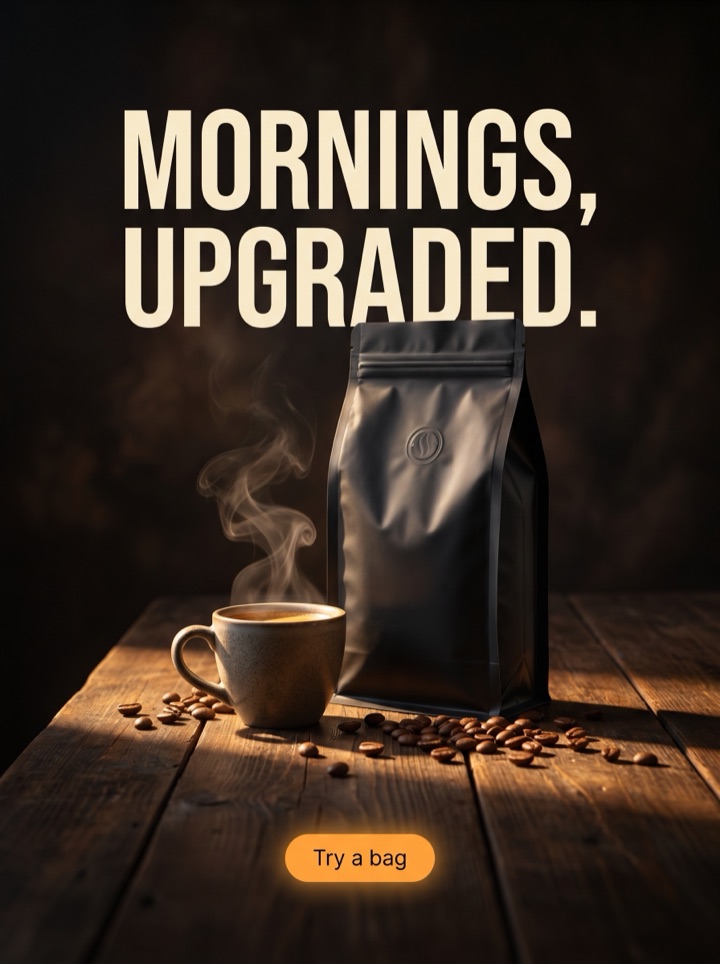



Campaign brief
Kitchen Product Ad Generator campaign brief
A kitchen tool sells on a job done and a counter kept clear, not on a mood. Use these notes to turn your one product photo into an ad test a home cook would actually stop on.
Best use
This generator earns its keep when your gadget has one obvious task — chop, brew, strain, sear, store — and you want to show that task removed, fast, without booking a food shoot.
Asset to upload
Upload a sharp photo where the surface, handle, or finish is legible: people read kitchen tools by their material. A clean cut-out or a single in-use frame beats a busy styled scene.
First test
Pit the demo-in-use angle against the spec-callout angle for the same tool. One sells the feeling of using it; the other sells the dishwasher-safe, capacity, and material facts. Let the click rate decide.
Format choice
Export 1:1 square and 4:5 feed first — that is where the demo crop and the spec line still read on a phone. Treat display banners and HTML5 as a later step, only when the smaller crop survives.
Copy direction
Use "Upgrade your kitchen" when the buyer already owns a worse version of the tool. Use "See how it works" when the gadget is unfamiliar and the demo is the whole pitch.
Human review
Ask whether the headline names a real kitchen chore. "Effortless quality" fits anything; "Dices an onion before your eyes water" could only be this drawer.
How it works
Build kitchen product creative around the chore it removes.
1
Start with the tool
Pick the photo that shows your gadget's material and the part that does the work — the blade, the spout, the nonstick face — so the ad can lead with the thing buyers judge.
2
Choose the buying reason
Generate angles a cook responds to: the live demo, the messy-counter fix, the spec callout, the one-tool swap, the review pull-quote, or a gift bundle.
3
Preview the pack
Scan the view-only previews and keep the two that name a different reason to buy — not the same layout with a swapped headline — before you pay.
4
Export what you can test
Unlock high-res files once the demo crop and the dishwasher-safe or material line still read clearly at Meta feed size.
Examples
Kitchen Product ad generator examples
Kitchen tools sell on a demonstrated job and a kept-clear counter. These are the angles that actually convert a home cook — pick two with real contrast for your first test.
Field notes
Kitchen product ad field notes
The human review layer for kitchen tools: what to check before a demo crop or a spec badge goes out the door.
Creative review
- Show the tool doing its job, not posing. A chef's knife mid-slice or a kettle mid-pour reads instantly; the same object sitting on a slab reads like a catalog thumbnail.
- Let the material carry the premium feel. Cast iron, copper, walnut, brushed steel — if the finish is the selling point, frame it so the texture is unmistakable rather than buried under a gradient.
- Pair one demo-led version with one spec-led version of the same tool. Curious buyers click the demo; researchers click the capacity and dishwasher-safe facts. The first test tells you which audience you have.
- Start tool first, chore-killing hook second, CTA third. Move the discount up only when the price drop — not the function — is the real reason to click.
Placement review
- Check the ad at phone width before export. A "5-quart, oven-safe to 500F" callout that looks crisp on desktop turns to mush in the feed, and that spec is often the whole pitch.
- Keep one version warm and lifestyle (the tool on a lived-in counter), one direct and promotional (the offer), and one proof-heavy (the review quote). That spread gives the first test real contrast.
- Do not promise a result the product page cannot back. "Dishwasher-safe" and "BPA-free" must be true on the listing, or the ad just buys you a refund.
Export review
- Unlock the paid pack when at least two previews argue a different reason to buy — the cleanup payoff and the one-tool swap, say — not one layout reskinned twice.
- If the tool has real specs — capacity, heat rating, blade material, footprint, weight — make those the visual proof instead of inventing a generic "best seller" badge.
- The final call should be boring in a good way: tool readable, chore obvious, CTA clear, and no roadmap-only format (HTML5, display ZIP, video) presented as if it ships today.
Sizes and exports
Sizes and exports for kitchen product ads
The crop should keep the tool legible and the spec line readable. Static posters ship first; display banners and HTML5 stay clearly labeled as agency or roadmap workflows until they are enabled.
1:1 square
Best when a tight tool-plus-spec-callout layout needs the hook and CTA balanced — strong for in-feed demos of a single gadget.
4:5 feed
Best for the before/after cleanup angle, where the extra height lets the greasy-pan and spotless-pan halves both breathe.
9:16 story/reels
Best for a full-screen demo: pour, sear, or slice up top, the dishwasher-safe payoff and CTA anchored at the bottom.
Facebook feed
Best when the gift-bundle or one-tool-swap shot needs room to show the box and accessories without crowding the offer.
You should leave knowing which photo shows the work, whether to lead with the demo or the dishwasher-safe spec, and which crop keeps it all legible in feed. Product AdKit centers that product workflow instead of handing you a blank canvas and a steep learning curve.
Copy examples
Hooks, CTAs, and mistakes for kitchen product ads.
Headline hooks
- The one tool that retires three drawer gadgets.
- Dinner's faster. Cleanup's a rinse.
- Dishwasher-safe, oven-ready, drawer-friendly.
- Built to take the heat — and the dishwasher.
- Less counter clutter. More finished meals.
- Sharp enough to feel the difference on the first cut.
- From greasy pan to spotless in one wipe.
- The upgrade your kitchen drawer has been waiting for.
CTA examples
- Upgrade your kitchen
- See how it works
- Clear the clutter
- Get the bundle
- Shop the tool
Common mistakes
- Styling a hero-food scene so lovingly the actual tool gets lost in the props.
- Selling "premium quality" in the abstract instead of naming the material — cast iron, 18/10 steel, walnut, copper.
- Hiding the demo: a kitchen gadget that never shows itself working leaves the buyer guessing what it does.
- Claiming dishwasher-safe, BPA-free, or heat-rated in the ad when the product page does not back it up.
- Running one angle four times instead of testing the demo, the cleanup payoff, and the spec callout against each other.
Examples
Kitchen Product ad generator examples
A quick human pass before a demo crop or spec badge becomes a production ad.
1
Does the ad show the tool doing its actual job, or just sitting on a surface looking nice?
2
Is the material or key spec — dishwasher-safe, capacity, heat rating — named, and does the product page back it up?
3
Does the headline name a real kitchen chore, or could it be pasted onto any product on the shelf?
4
At phone width, can you still read the spec callout and see what the tool does to the food?
5
Do your two strongest previews argue different reasons to buy, instead of one layout reskinned twice?
FAQ
Kitchen Product ad generator questions
My kitchen product looks plain on a white background. Will the ads still work?
Yes. A clean cut-out is often the best starting photo for a kitchen tool. The generator can place it on a countertop scene, near food, or in-hand, and add the spec callouts — dishwasher-safe, materials, capacity — that actually move kitchen shoppers.
Can the ad show my gadget actually in use, not just sitting there?
That is the angle that usually wins for kitchen products. You get layouts built around the demo moment — chopping, pouring, searing, the after shot of a clean pan — plus copy that names the task it removes, so the buyer pictures their own counter.
How do I make a $30 kitchen tool feel worth it in one frame?
Lead with the swap. The strongest kitchen product ads show one tool replacing three drawer gadgets, or one cleanup step instead of five. Steer the headline, the materials line, and the CTA per run so you can test the value angle before you pay to export.
Can I export kitchen product ads for Facebook and Instagram?
Yes. Product AdKit focuses first on Meta-ready static posters — square, 4:5 feed, and 9:16 story/reels — so the demo crop and the spec text still read at phone size in the feed.
Can I export kitchen product ads without a watermark?
Free previews are full-quality and view-only so you can judge the angle first. Paid packs unlock high-res, no-watermark exports and ZIP download when the pack is worth running.
Related tools