AI banner ad generator
AI banner ad generator
Banners are a different problem from feed ads: the product has to read inside a 300x250 box on someone else's webpage, next to content they actually came for. Upload one photo and get static banner concepts sized for the Google Display placements your retargeting runs in.
Free banner previews are full-quality and view-only so you can judge the layout, not publish it. Unlock the pack only once a concept reads at both 728x90 and 320x50, and you get high-res, no-watermark static banners plus a ZIP download. Animated HTML5 display export stays clearly marked as an agency roadmap format until it ships.
Examples
AI banner ad generator examples
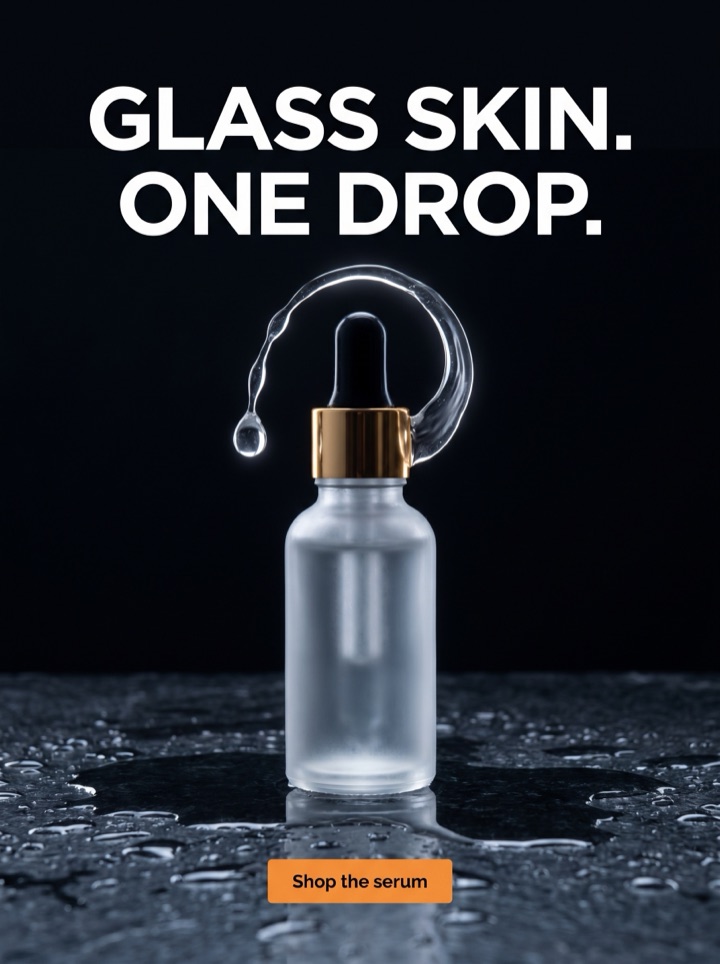
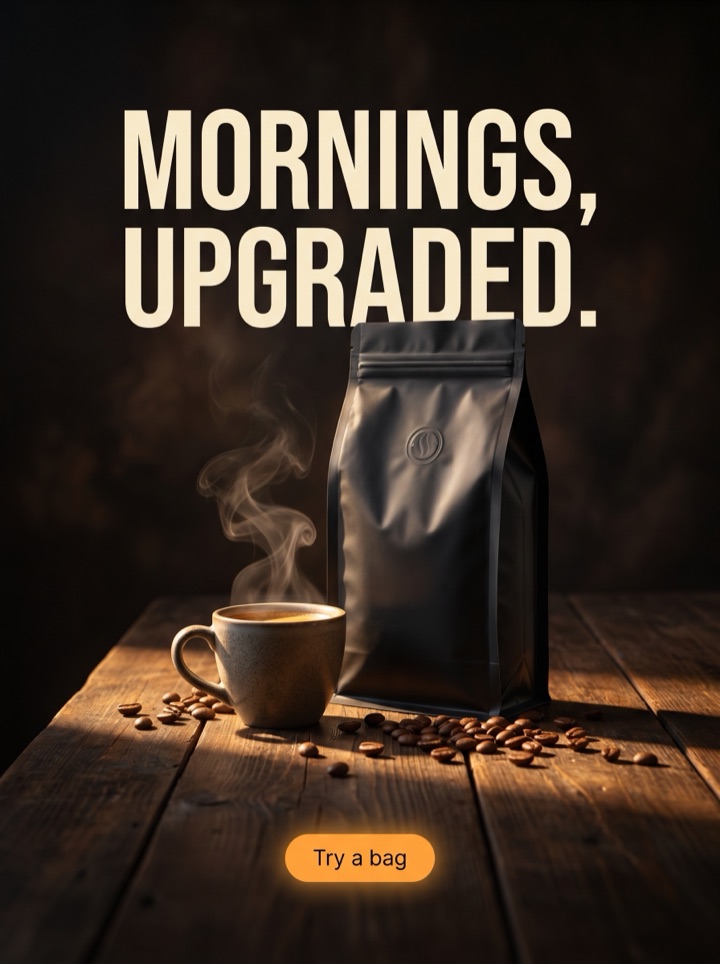
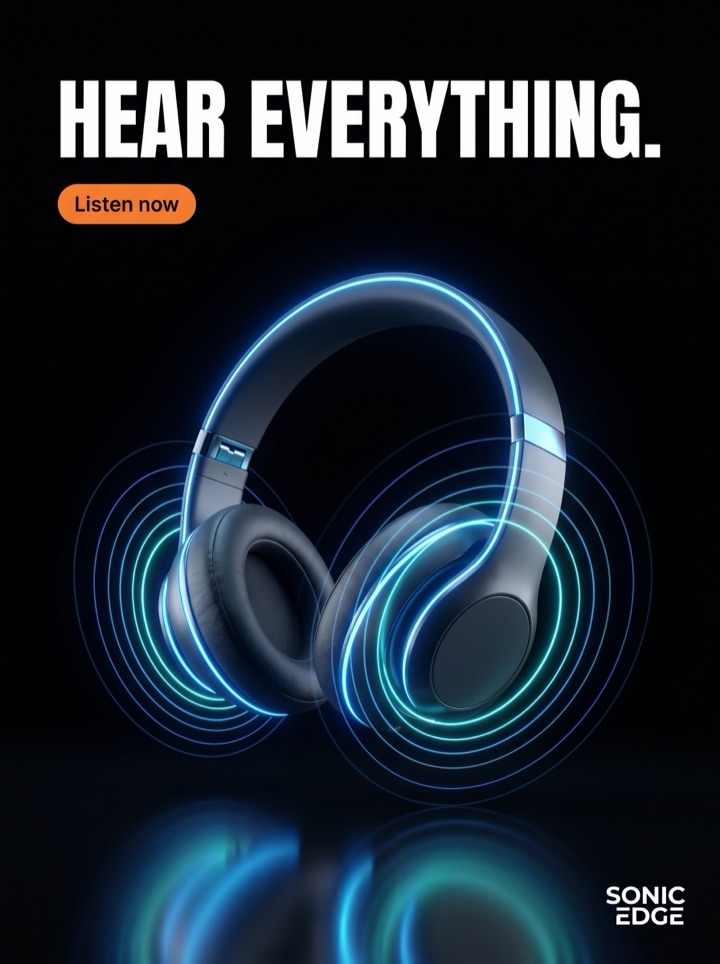
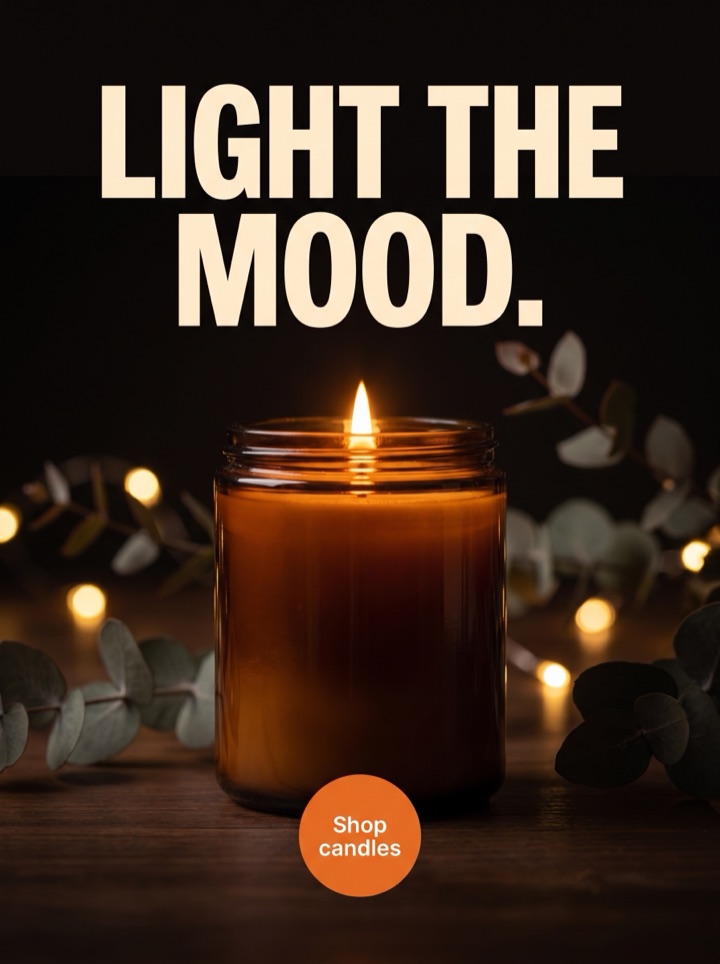
Display banners live next to content the reader actually came for, so the product has to win a glance in a box that might be 300 pixels wide. The concepts below show how the same product photo gets re-composed for different display slots, not the same poster reused at six sizes.


Campaign brief
Banner ad campaign brief
Banners are usually the cheap, always-on layer of a campaign: prospecting on the Google Display Network and retargeting people who already saw your product. Use these notes to brief a banner set that earns its placement instead of becoming wallpaper.
Best use
Banner ads work best for retargeting and broad display reach, where the viewer is mid-task on another site. The job is recognition and one clear next step, not a full pitch the way a feed ad can attempt.
Asset to upload
Use a clean product cutout with breathing room, because a banner crops the product into a tight box. A photo with a busy background or no margin will fight the headline and the CTA button for the few hundred pixels you get.
First test
Generate the 300x250 medium rectangle first. It is the most-trafficked display unit, so if the product and offer read there, you have a concept worth scaling out to leaderboard and half-page sizes.
Format choice
Build the static set across 300x250, 728x90, 300x600, 320x50, and 970x250. Treat animated HTML5 ZIP banners as a later upgrade, not the starting point, because static images cover most Google Display inventory on day one.
Copy direction
Banner copy has to survive at thumbnail scale. Lead with one benefit or one offer, keep the headline to a few words, and let the product photo carry the recognition rather than a paragraph.
Human review
Squint at the smallest size from arm's length. If you cannot tell what the product is and what to do next in under a second, the banner will lose the glance even if it looks fine zoomed in.
How it works
From one product photo to a static display banner set.
1
Upload the packshot
Drop in a product photo with a clean edge. This is the recognition anchor every banner size will be built around, so the cleaner the cutout, the better it crops into a 300-pixel box.
2
Pick the display angle
Choose a banner reason: retargeting reminder, percent-off offer, free-shipping nudge, new arrival, or social proof. Display banners reward one idea per unit, not three.
3
Preview the size set
Review view-only concepts laid out for 300x250, 728x90, 300x600, 320x50, and 970x250 so you can see how the product and CTA hold up across wide, tall, and tiny slots.
4
Export the static pack
Unlock high-res, no-watermark images plus a ZIP once a concept reads everywhere. Upload them to Google Ads as image display creatives; animated HTML5 ZIPs come later.
Examples
AI banner ad generator examples
Because a banner gets a glance, not a read, the angle has to be obvious. These are the display-friendly directions that survive being shrunk into a leaderboard or a mobile strip, and each one keeps the product as the hero.
Field notes
Banner ad field notes
These are the things that separate a banner that gets clicked from one the eye skips. They are specific to display placements, where you are a guest on someone else's page and have a fraction of a second to register.
Creative review
- A 300x250 has room for product, a two-line headline, and a button. A 728x90 leaderboard does not, so re-flow it horizontally instead of cramming the square layout into a strip.
- Keep the CTA button a different color from the product and the background. In a banner the button is the whole conversion, and it should be the first thing the eye lands on after the product.
- Give the product a clear edge against the background. Display backgrounds compete with whatever site the banner sits on, so contrast is what makes the product pop out of the page.
- One offer per banner. A discount and a free-shipping line and a star rating stacked together turn into noise at leaderboard height.
Placement review
- Preview at actual pixel size, not zoomed in. A headline that looks fine on your monitor can be unreadable at 320x50 on a phone, and 320x50 is a huge share of display impressions.
- For retargeting, the banner can be more direct than a prospecting one. The viewer already knows the product, so a reminder hook and a limited-stock note often beat a generic brand line.
- Match the banner's promise to the landing page. Display clicks are cheap and skeptical, so a discount in the banner that is missing on the page burns the click and the trust.
Export review
- Unlock the pack when the 300x250 and the 320x50 both read, since those two prove the concept survives the largest and smallest common slots.
- Use real product detail as proof: visible texture, packaging, or a credible rating. Generic starbursts and fake urgency badges read as spam on display.
- Export static images and a ZIP you can drop into Google Ads as image display creatives. Do not wait on animated HTML5 ZIP export, which is a roadmap format, not a live one.
Sizes and exports
Display banner sizes and exports
These are the static display units Product AdKit lays out from one photo. They cover the bulk of Google Display inventory. Animated HTML5 ZIP banners stay clearly labeled as a Pro and agency roadmap format until the export pipeline is live.
300x250 medium rectangle
The workhorse display unit and the highest-traffic size. Room for product, a short headline, and a button, so build and test this one first.
728x90 leaderboard
A wide top-of-page strip. Re-flow the layout horizontally with the product on one end and the CTA pill on the other rather than shrinking the square.
300x600 half-page
A tall sidebar unit with the most real estate. Good for a big product hero, an offer badge, and a sticky CTA at the base.
320x50 mobile and 970x250 billboard
The tiny mobile sticky and the wide desktop billboard. Strip the 320x50 to a thumbnail, three-word offer, and button; let the product float wide on the 970x250.
A blank-canvas tool makes you rebuild the same product banner five times, once per display size, and re-align the CTA each time. Product AdKit starts from your product photo and lays out the whole 300x250-through-970x250 set together, so the product, offer, and button stay consistent across every slot your Google Display campaign needs.
Copy examples
Banner hooks, CTAs, and mistakes.
Headline hooks
- Still thinking it over? It's almost gone.
- The [product] you looked at, now 20% off.
- Free shipping ends Sunday.
- 4.8 stars from 2,000+ buyers.
- New: the [product] everyone's reordering.
- Back in stock. Won't last.
- One you'll actually keep using.
- Skip the cart. Grab it before it's gone.
CTA examples
- Shop now
- Get the deal
- Claim 20% off
- See it
- Grab yours
Common mistakes
- Cramming the 300x250 layout into a 728x90 leaderboard instead of re-flowing it wide.
- A CTA button that blends into the background, so the banner has no obvious place to click.
- Stacking three offers in one banner until none of them register at thumbnail size.
- A busy product photo with no clean edge, so the product never separates from the host page.
- Promising animated HTML5 ZIP banners as live when only static image export ships today.
Examples
AI banner ad generator examples
Run this pass before you upload a banner set to Google Ads. It catches the display-specific failures that a feed-ad checklist misses.
1
At 320x50 actual size, can you tell what the product is and what to do next in under a second?
2
Is the CTA button the most contrasting element, so it reads as the place to click on any host page?
3
Does the wide 728x90 use a horizontal layout instead of a squashed version of the 300x250?
4
Does the offer in the banner match what the landing page actually delivers when the click arrives?
5
Are you exporting static images now and leaving animated HTML5 ZIP banners for the agency roadmap?
FAQ
AI banner ad generator questions
Which display banner sizes can I make from a product photo?
Upload one product photo and Product AdKit lays out static banner concepts for the workhorse Google Display sizes: 300x250 medium rectangle, 728x90 leaderboard, 300x600 half-page, 320x50 mobile, and 970x250 billboard. Each one is a static image you can preview before paying.
Are these animated HTML5 banners or static images?
Right now Product AdKit generates static banner images (PNG/JPG). Animated HTML5 ZIP banners with motion and clickTags are on the Pro and agency roadmap, not live yet. We label any roadmap format clearly so you never publish something that does not exist.
Will a banner read at 728x90 and 320x50 if it works at 300x250?
Not always, and that is the whole craft of banners. A 300x250 has room for product, headline, and CTA; a 728x90 leaderboard is a thin strip and a 320x50 mobile banner is tiny. Preview the small and wide sizes before export and cut copy until the product and button still read at a glance.
Can I export banner ads without a watermark for Google Ads?
Free banner previews are full-quality and view-only so you can judge the layout. Paid packs unlock high-res, no-watermark static banners and a ZIP download you can upload to Google Ads as image display creatives.
Related tools