Shopify Facebook ad generator
Shopify Facebook ad generator
Take a Shopify product into the Facebook feed without a designer. Upload the photo, get square and 4:5 creatives sized for the mobile scroll, with the on-image hook kept short so it still reads next to your caption and the Shop Now button.
Free feed previews are full-quality and view-only — enough to judge whether a hook earns the scroll. Unlock the pack only when a creative is worth exporting as a high-res, no-watermark file ready to upload into Meta Ads Manager.
Examples
Shopify Facebook ad generator examples
Each example is a Facebook feed ad built around a Shopify product — the kind of creative that has to win the half-second before a thumb keeps scrolling. They show different buying reasons on the same product, not the same layout with a swapped headline.


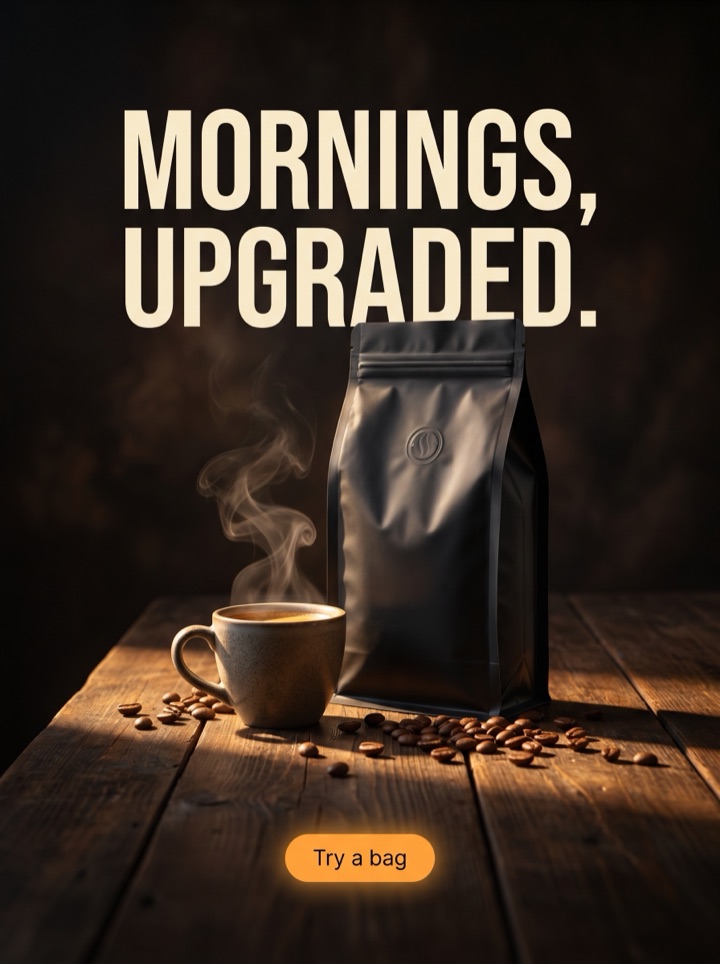



Campaign brief
Plan a Facebook feed test from your Shopify product
A Facebook ad is judged in the feed, between a friend's photo and a news post. Use these notes to plan a creative that earns the stop, then matches what the buyer lands on back in your Shopify store.
Best use
Best when you already sell on Shopify and want to test cold-traffic feed ads without booking a designer or rebuilding the shot from scratch in a blank canvas.
Photo to upload
Use the product image already live on your storefront. The feed ad and the product page should look like the same item, or the click feels like a bait-and-switch and bounces.
First test
Run one offer-led creative against one proof-led creative on the same product. On cold Facebook traffic, the proof angle often wins for an unknown brand; the offer angle wins for a known category.
Format choice
Export 1:1 and 4:5 first — those are the two feed sizes you upload into Meta Ads Manager. The 4:5 crop owns more vertical space on a phone, so it is usually the one to beat.
Copy split
Decide what lives on the image versus in Meta's primary text. The image carries the hook; the primary text carries the offer, shipping, and the reason to tap Shop Now.
Human review
Mute the sound, scroll fast, and ask whether the product still registers. If you can't tell what you'd be buying in half a second, the feed won't either.
How it works
From Shopify product to a Facebook feed ad in four steps.
1
Bring in the product
Upload your storefront product photo so the ad starts from the exact item you sell.
2
Pick the buying reason
Choose the angle for this audience: review proof, a limited offer, a new-drop launch, a bundle, or a quiet premium frame for a known brand.
3
Preview in feed sizes
See view-only 1:1 and 4:5 previews at phone scale and judge them the way the feed will — fast, muted, mid-scroll.
4
Export and upload
Unlock the high-res, no-watermark file when a creative is worth running, then drop it into Meta Ads Manager and write your primary text and headline there.
Examples
Shopify Facebook ad generator examples
The feed rewards a clear reason to stop, not a clever layout. These are the angles worth testing first for a Shopify product on cold Facebook traffic — pick two with real contrast and let the data choose.
Field notes
Field notes for Shopify-to-Facebook ads
These are the checks that separate a feed ad that converts from one that just looks fine in a slide deck. They are specific to the Facebook feed and to traffic landing back on a Shopify product page.
Creative review
- The product should be the largest, clearest thing in the frame. In the feed the photo is what stops the thumb — the on-image words only matter once the scroll has already slowed.
- Keep the on-image hook to a few words. It is competing with the primary text, the headline, the Shop Now button, and everything else Facebook stacks around your creative.
- Match the ad to the storefront. If the buyer taps through and the Shopify product page looks like a different brand, the click was wasted and the bounce trains the algorithm against you.
- Product first, hook second, button styling third. Move price or discount copy up only when the offer is the actual reason someone would stop.
Placement review
- Preview at phone width before you export. Benefit copy that reads on a desktop monitor often vanishes in the mobile feed where almost all Facebook impressions land.
- Build the test as a contrast: one calm/premium creative, one direct/promotional, one proof-led with a review. That gives Meta real variety to optimize across instead of three near-duplicates.
- Test 4:5 against 1:1 on the same concept. The taller 4:5 frame claims more screen and usually wins early, but heavier creative can cost more to deliver — let cost-per-result decide, not taste.
Export review
- Unlock a paid pack when at least two previews show a genuinely different buying reason, not the same layout with a swapped headline.
- If the product has texture, packaging, ingredients, or a sense of scale, use that as the proof instead of pasting on a generic 50% OFF badge — Facebook users have learned to skip badges.
- The final export should be boring in the right way: product readable while scrolling, one clear hook, and the offer left for the primary text field rather than crammed onto the image.
Sizes and exports
The sizes that fit the Facebook feed
Facebook serves your creative across a few placements. Static images for the feed are available first; Story and Reels crops follow the same product, and any display or HTML5 format stays clearly labeled as an agency or roadmap workflow until it is enabled.
1:1 square
The safe default for the Facebook feed. A square sits cleanly between desktop and mobile and gives the product, hook, and button-styled CTA balanced room.
4:5 vertical
The mobile-feed workhorse. It takes the maximum height Facebook allows in-feed, so the product fills more of the phone screen before someone scrolls past.
9:16 story / reels
For full-screen Stories and Reels placements. Leave breathing room top and bottom so the product and CTA stay clear of Facebook's UI overlays.
Upload to Meta
Export the static image, then add the primary text, headline, and Shop Now destination inside Meta Ads Manager — those fields live on the platform, not baked into the file.
A design canvas hands you an empty 1080 square and wishes you luck. Product AdKit starts from your Shopify product and works toward a Facebook feed test: it suggests the angle, sizes the crop for the mobile scroll, and keeps the offer copy out of the image so it can live in Meta's primary text where it belongs. You decide which hook to run; the tool handles getting it feed-ready.
Copy examples
On-image hooks, CTAs, and feed mistakes to avoid.
Headline hooks
- The detail buyers keep mentioning in the reviews.
- Sold out twice. Back for the weekend.
- Why your old one keeps letting you down.
- One tap. Ships from our Shopify store today.
- The upgrade you'll notice on day one.
- Quietly better than the brand you already know.
- Buy two, the second is on us.
- Made for the thing every review complains about.
CTA examples
- Shop Now
- See it in action
- Get yours before it's gone
- Read the reviews
- Claim the bundle
Common mistakes
- Cramming the offer onto the image instead of putting it in Meta's primary text where it can run longer.
- Exporting a desktop-width creative and never previewing it at the phone size where the feed actually serves it.
- Running an ad whose product looks nothing like the Shopify page it links to, so the click bounces.
- Testing three near-identical variants, which gives Meta nothing real to optimize between.
- Stacking discount badges and stickers a feed-trained shopper has learned to scroll straight past.
Examples
Shopify Facebook ad generator examples
Run this human pass on each creative before it becomes a live Facebook ad spending budget.
1
Previewed at phone width — does the product still read mid-scroll with the sound off?
2
Does the creative match the Shopify product page it links to, so the click doesn't feel like a switch?
3
Is the on-image hook short enough to survive next to the primary text, headline, and Shop Now button?
4
Are your variants genuinely different angles, not the same layout with a new line of copy?
5
Is the offer in Meta's primary text field instead of crammed onto the image as a badge?
FAQ
Shopify Facebook ad generator questions
What sizes should I export for a Facebook feed ad from Shopify?
Start with 1:1 square and 4:5 vertical. The 4:5 crop takes more height in the mobile feed and pushes your store's other posts further down the screen, which is why most Shopify founders test it first. Both export as static images you can upload straight into Meta Ads Manager.
Does the on-image text count as my Facebook primary text or headline?
No. The words baked into the creative are separate from the primary text above the image and the headline below it that you type into Meta Ads Manager. Keep the on-image hook short so the creative still reads while it competes with the caption and the Shop Now button in the feed.
What photo should I use for a Facebook ad from my Shopify store?
Upload the product image you already use on the storefront so the ad matches what the buyer sees after they tap through. A clean, well-lit shot with a little empty space around the product gives the headline and CTA room to sit.
How much text can I put on the image before Facebook limits reach?
Meta no longer hard-rejects image text, but heavy text-over-image creative still tends to get suppressed reach. Keep the headline to a few words, let the product carry the frame, and move the offer details into the primary text field rather than crowding the poster.
Related tools