Google Display ad generator
Google Display ad generator
Upload one product photo and get banner concepts laid out for the real GDN sizes — 300x250, 728x90, 300x600, 320x50, and the 970x250 billboard — where the product still reads at tiny pixel dimensions.
Free display previews are full-quality and view-only. Static PNG and JPG banners run as image ads in Google Ads today; animated HTML5 ZIP export is on the agency roadmap, not a live feature. Unlock the pack only when the banner reads cleanly at 300x250 and you want high-res, no-watermark files.
Examples
Google Display ad generator examples
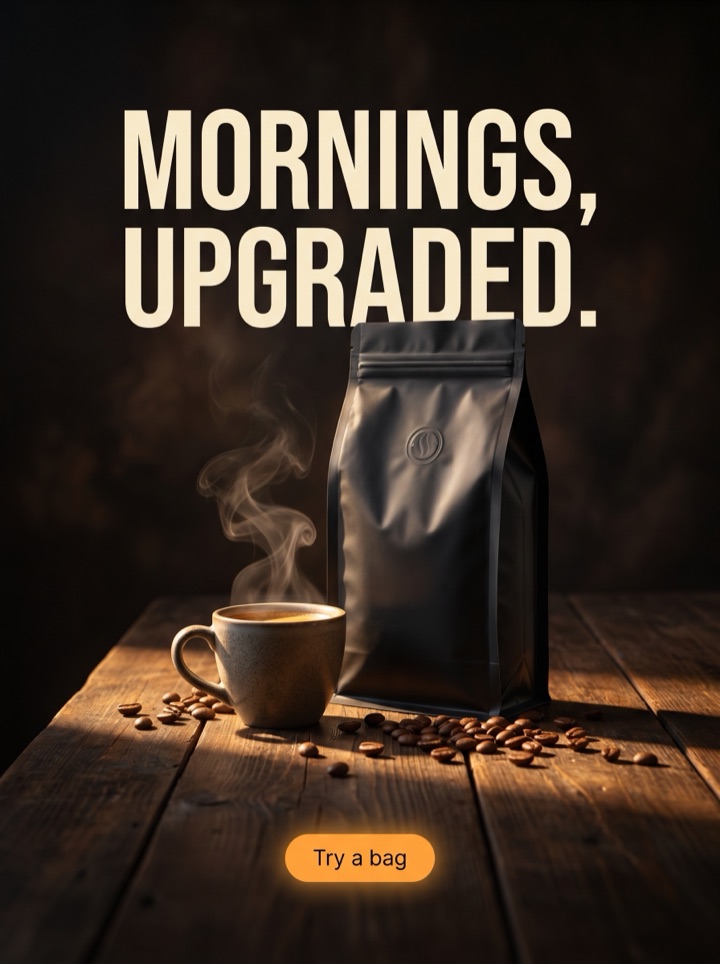
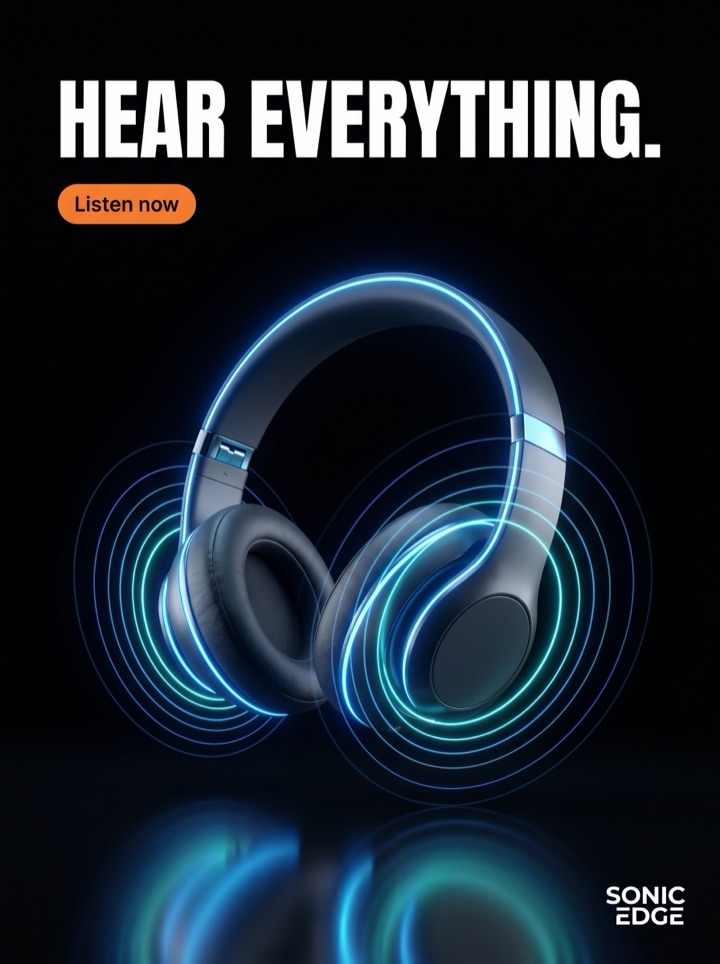
Display is a glance medium: your banner sits inside someone else's article and gets a fraction of a second to register. These examples show the same product worked into different GDN shapes and angles, so you can see what survives a 300x250 box versus a 970x250 billboard before you commit to a size set.




Campaign brief
Google Display ad generator campaign brief
A Display banner has a different job than a feed ad: it interrupts someone reading an article, not someone scrolling for content. Use these notes to brief the creative before you spend GDN impressions.
Best use
Display works best for retargeting warm visitors and cheap reach against in-market and affinity audiences. Lead with the product the shopper already saw, not a cold-intro story.
Asset to upload
Upload a product photo with clean edges and breathing room. Display crops the product into small boxes, so a busy or dark background turns into mud at 300x250 and 320x50.
First test
Generate the 300x250 medium rectangle first. It serves on the widest set of placements, so if the product, headline, and button read there, the rest of the size set usually follows.
Format choice
Pick a size set, not one banner: 300x250, 728x90, 300x600, and 320x50 cover most desktop and mobile inventory. Add 970x250 only when you have a strong wide image.
Copy direction
Display copy is a glance, not a paragraph. Three to six words of benefit plus a button verb beats a clever headline that nobody finishes reading inside a tiny banner.
Human review
Squint test every preview. If you cannot tell what the product is and what to do in one second at actual pixel size, the banner will lose the auction's attention, not just the click.
How it works
From product photo to a Display size set.
1
Upload the product
Upload a clean product photo. This is the image that has to survive being shrunk into a 320x50 strip.
2
Pick the angle
Choose a Display-friendly reason to click: a discount, free shipping, a star-rating proof line, or a new drop. Short, button-led angles beat long stories on this network.
3
Preview each size
Review view-only concepts laid out per shape — rectangle, leaderboard, half-page, mobile banner — so you can catch copy that breaks at the smaller dimensions.
4
Export image ads
Unlock high-res, no-watermark PNG and JPG banners to upload as image ads in Google Ads. Treat animated HTML5 ZIP as a planned agency feature, not a current export.
Examples
Google Display ad generator examples
The angles that convert on GDN skew to warm intent and short, punchy offers, because most Display impressions are retargeting or in-market reach, not first introductions. These are the angles worth generating before you build a size set.
Field notes
Google Display ad generator field notes
Display has its own failure modes that feed ads never hit: text that vanishes at small sizes, banners that look like adjacent content, and a CTA that disappears into the layout. These are the checks that matter on GDN.
Creative review
- Keep the product the hero. A Display banner is mostly product plus one short line; if the background art is the loudest thing, the shopper sees decoration and scrolls past the article instead of the ad.
- Make the CTA look like a button, with a fill color and padding. On Display, an underlined text link blends into the publisher's page and quietly kills your click-through rate.
- Fix one color contrast that pops against white and against dark article backgrounds. Your banner does not control the page it lands on, so it has to win on either.
- Cap the headline at roughly six words. Anything longer wraps or shrinks below readable size in a 728x90 leaderboard or 320x50 mobile strip.
Placement review
- Preview every size at 100 percent, not zoomed-in. A 300x600 half-page that looks balanced on screen can still crush the CTA when the browser renders it at true pixels.
- Build one wide concept (728x90 or 970x250) and one tall concept (300x600) on purpose. The same crop almost never works for both, so design the extremes and let the rectangles fall in between.
- Add a faint border or framed edge if your banner is light-on-light. Without it, the ad can read as part of the host page, which feels deceptive and underperforms.
Export review
- Confirm each banner stays under the Google Ads file weight ceiling (150KB for image ads) before you build the full size set, so a heavy hero image does not get rejected at upload.
- Use real product proof — packaging, texture, a visible rating — instead of generic urgency badges. Retargeted Display viewers already know the product, so credibility beats hype.
- Export static PNG or JPG image ads and stop there. Do not present animated HTML5 ZIP as a live export when it is on the agency roadmap.
Sizes and exports
The GDN sizes worth building
Google lists dozens of banner dimensions, but a handful capture most ecommerce inventory. Build these first as static image ads. Animated HTML5 ZIP packs stay labeled as a planned agency workflow until that pipeline is live.
300x250 medium rectangle
The workhorse. It serves on the widest range of desktop and mobile placements, so design this one first and use it to judge the rest of the set.
728x90 leaderboard
Wide and short, anchored above or below article content. Put the product on one end and a single-line benefit plus button across the rest.
300x600 half-page
The tall sidebar unit with the most real estate. Stack product, a short value proposition, and a bottom-anchored CTA for high viewability.
320x50 and 970x250
320x50 is the mobile banner where copy must be tiny and tappable; 970x250 is the desktop billboard that needs a strong wide product image to fill it.
The painful part of Google Display is not designing one banner — it is rebuilding the same product into five different boxes so it still reads at every size. Product AdKit starts from your product photo and lays out each GDN shape for you, so you spend your time choosing the angle and the offer instead of nudging a CTA around an empty canvas.
Copy examples
Banner hooks, button text, and Display mistakes.
Headline hooks
- Still thinking it over? Take 15% off.
- The [product] you left in your cart.
- Free shipping on your first order.
- 4.8 stars from 2,000+ buyers.
- Back in stock — won't last.
- New: [product], now shipping.
- Two for the price of one, this week.
- The best-seller, restocked.
CTA examples
- Shop now
- Get [X]% off
- Claim the deal
- See it
- Buy again
Common mistakes
- Writing feed-length copy that shrinks below readable size in a 728x90 or 320x50 banner.
- Using a plain text link instead of a real button, so the CTA blends into the publisher's page.
- Designing only a 300x250 and stretching it, instead of laying out the wide and tall sizes on purpose.
- Shipping a banner over the 150KB image-ad weight limit and getting it rejected at upload.
- Presenting animated HTML5 ZIP export as live when it is still an agency roadmap feature.
Examples
Google Display ad generator examples
Run each preview through this before you upload it to a Google Ads display campaign.
1
At true pixel size, can you tell what the product is and what to do in one second?
2
Does the CTA read as a tappable button, with enough contrast to survive a white or dark host page?
3
Do the wide (728x90) and tall (300x600) sizes have their own crops, not a stretched rectangle?
4
Is each banner under the 150KB image-ad weight limit so it will not bounce at upload?
5
Are you exporting static image ads only, with HTML5 ZIP left as a clearly-labeled roadmap feature?
FAQ
Google Display ad generator questions
Which Google Display banner sizes does this cover?
The concepts target the GDN sizes that win most ecommerce impressions: 300x250 medium rectangle, 336x280 large rectangle, 728x90 leaderboard, 300x600 half-page, 320x50 mobile banner, and 970x250 billboard. We design the 300x250 first because it serves on the widest range of placements.
Are these static images or HTML5 ZIP files for Google Ads?
They are static banner concepts you preview and steer. Static PNG and JPG uploads run as image ads in the Display Network today. Animated HTML5 ZIP export is on the agency roadmap, not a live feature, so we never present a ZIP download as available.
Will one product photo fill both a 728x90 leaderboard and a 300x600 half-page?
Not automatically, and that is the point. A wide leaderboard and a tall half-page need different crops, copy length, and CTA placement. Each preview is laid out for its own aspect ratio so the product, headline, and button still read at that exact pixel size.
How is this different from a Facebook or Instagram feed ad?
Feed ads have a caption and room to breathe; Display banners are tiny, surrounded by publisher content, and judged in a fraction of a second. So the copy is shorter, the product is bigger, the CTA is a clear button, and contrast has to survive a cluttered placement.
Related tools